

















The Hong Konger Promise of Refuge Act: Answers to Common Questions
The web version of this advisory is in English. A Chinese PDF is available above.
On September 30, Senator Jeff Merkley (D-OR) introduced the Hong Konger Promise of Refuge Act (S. 5606), and Representative Jim McGovern (D-MA) introduced the House companion (H.R. 10685) the next day. Both bills have been referred to the Judiciary Committees. As of November 2, the House bill has one cosponsor, Representative Ro Khanna (D-CA), and the Senate bill has none. The bill needs cosponsors from both parties, and members of Congress sign on when their own constituents ask them to. This notice explains what you can do and answers the questions you are likely to hear from friends, coworkers, and congressional staff when you make the case. Our October 6 advisory explains what the bill would do and what it would not change.
First, Three Things You Can Do
- Write to your members of Congress. Go to call4hk.us, enter your address, and send the message to your two senators and your representative. It takes about two minutes. Add a sentence of your own if you can. You do not need to say that you are on DED, and congressional offices are not immigration enforcement agencies.
- Ask five friends or family members to do the same. Anyone who lives in the United States can write, Hongkonger or not, citizen or not. Offices count messages from their own constituents, so a message from a friend in a district represented by a Republican is worth as much as yours, and right now the bill needs Republican cosponsors most.
- Work with your local Hongkonger community group. Groups such as the Hongkonger Community Center and Action for Hongkongers are helping Hongkongers meet their representatives’ district offices and local media. A meeting with a handful of constituents does more than a hundred form emails. If you are not already connected to a group near you, ask us and we will put you in touch.
Questions You Will Be Asked
What does the bill do?
It lets Hongkongers already covered by Deferred Enforced Departure (DED), together with their spouses and children, apply for a green card during a one-year window after it becomes law. To qualify, you must have lived in the US continuously since January 15, 2025, not have returned to Hong Kong or mainland China since then, have no felony or multiple misdemeanor convictions, and not be subject to an extradition request. While an application is pending, the applicant cannot be detained or removed and can work.
Isn’t this an immigration bill?
It uses immigration law to answer a China policy question. The United States protected these Hongkongers because Beijing crushed Hong Kong’s freedoms, a position every administration since 2019 has taken, and the only question the bill answers is what happens to them when that protection ends on February 5, 2027. It does not change who may come to the United States, creates no new visa or program, and applies only to a fixed group of several thousand people who are already here.
What about national security? How do we know who these people are?
Every person the bill covers was screened by the State Department before receiving a US visa, entered through a port of entry, and has lived under DHS oversight for years. Those who applied for work permits under DED gave USCIS their biometrics and passed background checks. The bill adds its own bars: anyone with a felony or multiple misdemeanor convictions, or who is subject to extradition, is excluded, and USCIS would run its usual checks on every application. These are the people who stood up to the Chinese Communist Party, not the people it sends.
Isn’t this amnesty?
No. The people covered are lawfully present today and have been since they arrived. The bill gives a small, vetted group a one-year window to apply, with a criminal bar, and then closes. Congress used exactly this structure for Chinese students after Tiananmen in 1992 and for Liberians under DED in 2019.
Why this group and not others?
Three reasons. The deadline is fixed: on February 5, 2027, several thousand people lose their protection from removal and their work authorization on the same day, and the administration has signaled it will not extend DED. The group is small and defined, which is why Congress can act on it when it cannot act on immigration generally. And Hongkongers have bipartisan support, which makes passage more viable: President Trump declared a national emergency over Hong Kong in 2020, President Biden granted DED in 2021 and extended it twice, and the Trump administration issued work permits under it in 2025. The bill takes nothing from anyone else.
Why can’t they just apply for asylum?
Asylum generally must be filed within one year of arrival, which rules out most Hongkongers under DED, who have been here for years. For those who can file, cases take years in a backlogged system, grant rates under current policy are very low, and a denial means referral to immigration court for removal. Asylum also decides cases one at a time, while the danger these Hongkongers face is collective: Hong Kong’s National Security Law reaches speech made anywhere in the world, and the Hong Kong police have put bounties on activists living in the United States.
Why can’t the President just extend DED?
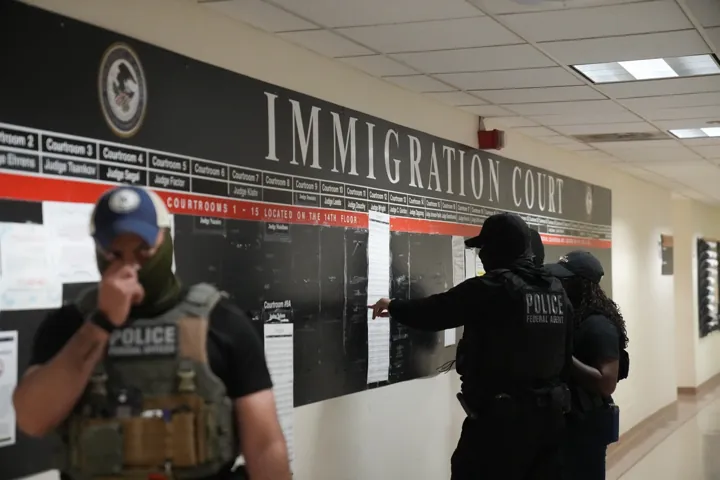
He could, but DED would still be a memorandum that any president can end, and it confers no status: the only document a DED holder can show is a work permit, which many never applied for. That is one reason people with a valid protection have been detained since June. Only Congress can turn a temporary memorandum into durable status, and the executive branch has no authority to create a green card pathway on its own. Even if DED were extended again, this bill would still be needed.
Why should Republicans support it?
Because Republicans built the policy this bill completes. President Trump ended Hong Kong’s special treatment under US law in 2020 after the National Security Law was imposed. In December 2019, he signed the same mechanism for Liberian DED holders into the National Defense Authorization Act. As a senator, Marco Rubio led the Hong Kong Safe Harbor Act in 2021 and said the United States should open its doors to Hongkongers who stood up to the Chinese Communist Party. President George H.W. Bush signed the Chinese Student Protection Act after Tiananmen. Sending Hong Kong’s democracy activists back to Beijing’s courts would undo a record that Republicans have every reason to be proud of.
Why does it need both parties?
A bill on its own rarely becomes law in the time this one has. The realistic route, as with the Liberian provision in 2019, is inclusion in a must-pass bill at the end of the year, such as the National Defense Authorization Act or a government funding bill. Every Republican cosponsor makes the bill harder to leave out, and every Democratic cosponsor shows the breadth of support. If the bill is not included this year, the sponsors will try again in the new Congress, where it will need the same bipartisan base.
What happens to people who are sent back?
Hong Kong authorities have arrested more than 10,000 people in connection with the 2019 protests, and human rights groups count more than 1,900 political prisoners in the city. The National Security Law applies to acts committed outside Hong Kong, including posts, memes, and protest songs, and the police have offered rewards of HK$1 million for activists living abroad. For anyone who protested, wrote, or organized, return risks interrogation or prosecution.
What are the odds?
Honest answer: long. Passage before February 5, 2027 is unlikely, and we have told Hongkongers under DED to keep planning on the assumption that DED ends on schedule. But the odds depend on the cosponsor list, and the cosponsor list depends on how many constituents ask. If it passes, it will be because enough members of Congress hear from enough people in their own districts that it matters to them.
This message is provided for general informational purposes. It is not legal advice, and receiving it does not create an attorney-client relationship. Immigration outcomes depend on individual facts. Please consult a qualified immigration attorney about your specific circumstances. For any questions, contact us.
Get advisories like this by email